Can Plants Be Harmed By Electricity?
Not all electricity benefits plants. High-voltage AC fields can harm plant growth, while low-voltage DC stimulation may improve it.
Can Plants Be Harmed By Electricity?
To be fair, not all forms of electricity are beneficial to plants.
For example, I’d like to take a moment and share with you a snippet from a 2011 science report:
“The effect of a direct electric current on the germination and growth of seeds of Phaseolus vulgaris, Raphanus sativus and Cucumis sativus and growth and development of seedlings of cultivar of Capsicum annuum.”
— Dinara Gabdrakhmanova and Celine Quissiny, University High School
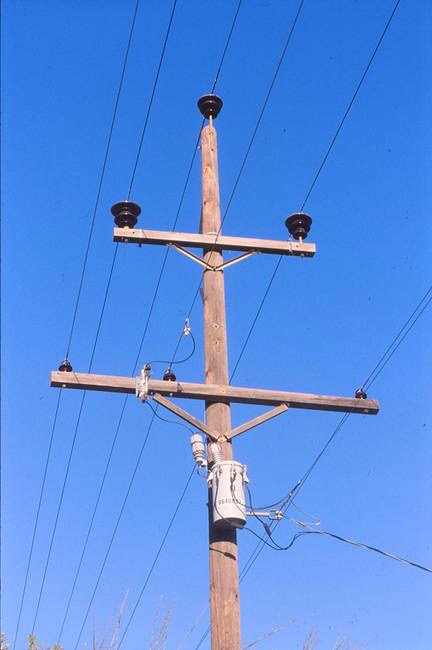
High Voltage AC Powerlines and Plant Health
Research has shown that certain types of electrical exposure can actually be harmful to plant life.
For example, the Genetic and Cytology Department of the National Research Center of Egypt conducted an experiment investigating the effects of extremely low frequency electric fields on plant growth.
Their experimental setup examined wheat plants exposed to electric fields similar to those produced near high-voltage transmission lines.
The experiment used:
- 50 Hz electric fields
- 6 kV/m field strength
- Exposure similar to being near 66 kV power transmission lines
The results were significant.
Researchers found that plants exposed to these fields showed:
- a large number of chromosomal abnormalities
- changes in morphological characteristics
- longer stems
- but reduced spike weight
- and fewer grains per spike
In other words, the plants grew taller but produced less usable crop yield.
AC Electrical Fields and Plant Stress
In this and other studies, the effect of AC electric fields has been shown to be harmful to plant life when applied directly or when plants are exposed to strong fields nearby.
This effect can occur even many meters away from the source.
Only in a very narrow set of circumstances has AC electrical exposure been shown to be beneficial.
This is important to keep in mind when evaluating different claims around electrical stimulation of plants.
A Different Result with Low Voltage DC
Interestingly, very different results appear when low-voltage DC electricity is used instead.
In the following video, researcher Steven Magee explains that his houseplant, which should normally have leaves roughly the size of his hand, had much smaller leaves due to the presence of a nearby cell phone tower.
However, when he grew the plants while directly connected to a 1.5V DC source, the plant growth improved dramatically.
What This Means
The important takeaway is that not all electricity affects plants in the same way.
Strong alternating electric fields, such as those produced by power infrastructure, can cause biological stress in plants.
However, very low-voltage electrical stimulation appears capable of improving plant growth under certain conditions.
Understanding the difference between these effects is essential when studying or experimenting with electroculture and electrical plant stimulation.
Reference
Hanafy, Magda S., Hanan A. Mohamed, and Elham A. Abd El-Hady.
“Effect of Low Frequency Electric Field on Growth Characteristics and Protein Molecular Structure of Wheat Plant.”
Romanian Journal of Biophysics 16.4 (2006): 253–271.
Tags: electroculture · precautions · AC electricity · electro-horticulture
Continue Your Learning Journey
This article is part of a larger body of knowledge covering electroculture, atmospheric energy harvesting, soil enhancement, plant stimulation, and experimental growing systems.
Learn more inside Energetic Growers Academy.
Explore Courses