What Is Electroculture?
A comprehensive overview of electroculture: its definition, historical context, experimental methods, and current state of knowledge.
Definition
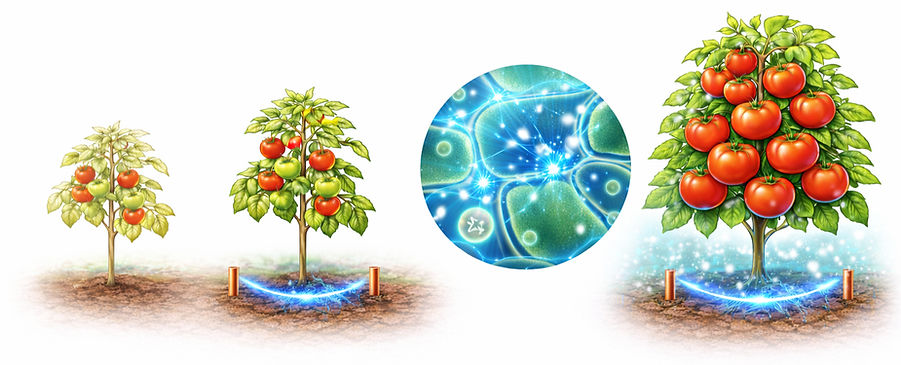
Electroculture is the experimental practice of applying electrical stimulation to plants, soil, or the growing environment to investigate potential effects on plant growth, yield, and overall health. This includes the use of atmospheric antennas, direct electrical current, electromagnetic fields, and atmospheric ionization techniques.
The underlying hypothesis is that controlled electrical or electromagnetic energy may influence biological processes in plants—such as nutrient uptake, photosynthesis efficiency, or root development—though mechanisms remain incompletely understood and results vary widely across studies.
Historical Context
Early Experiments (18th–19th Century)
Interest in electroculture began in the 1700s when scientists first explored connections between electricity and living systems. Early agricultural experimenters, including the Abbé Nollet in France and later researchers across Europe, tested whether electrical stimulation could enhance crop growth.
Peak Interest (Late 1800s–Early 1900s)
The late 19th and early 20th centuries saw widespread experimentation with electroculture techniques. Researchers installed wire grids, atmospheric antennas, and ground electrodes in fields to expose crops to electrical fields. Some studies reported increased yields; others found no effect. Enthusiasm waned as results proved inconsistent and reproducibility remained elusive.
Modern Revival (2000s–Present)
Interest in electroculture has resurged among experimental gardeners, small-scale farmers, and researchers exploring alternative agricultural methods. Modern approaches combine traditional techniques with contemporary tools: microcontrollers, precise voltage control, and better documentation practices.
Electric Fertilizer's own part in this story starts with one backyard test — see My First Experiment for the full origin story, including its limitations.
Common Methods & Techniques
Atmospheric Antennas
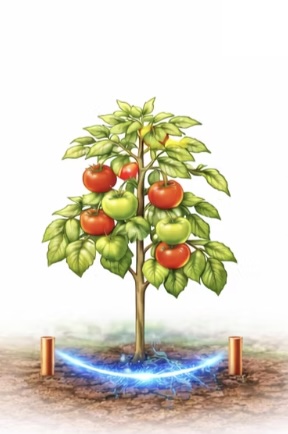
Metal structures (typically copper wire or rods) are erected above or near plants to capture atmospheric electrical potential. The theory suggests these antennas may create localized electrical fields or ionize the surrounding air, potentially influencing plant metabolism.
Direct Electrical Stimulation
Low-voltage electrical current is applied directly to soil via electrodes. Voltage and frequency vary by experiment. Some researchers hypothesize that this may affect soil chemistry, microbial activity, or root electrical potential.
Electromagnetic Field Exposure
Plants are exposed to controlled electromagnetic fields (EMF) at various frequencies. Studies explore whether specific frequencies correlate with measurable changes in growth rate, germination, or stress response.
Ionization
Negative or positive air ions are introduced into the growing environment. The hypothesis is that charged particles may influence stomatal function, photosynthesis, or plant defense mechanisms.
How It Works



What Is Known
Some Peer-Reviewed Research Exists
A limited body of peer-reviewed studies documents effects of electrical stimulation on plant systems. Results are mixed, with some studies showing positive effects on germination or growth, while others find no significant difference.
Mechanisms Remain Unclear
The biological and chemical mechanisms by which electrical stimulation might affect plants are not well established. Proposed pathways include altered ion transport, changes in membrane potential, and effects on soil microbiome activity.
Replication Is Difficult
Many historical and contemporary experiments lack sufficient documentation of variables (voltage, frequency, duration, soil type, environmental conditions), making systematic replication and meta-analysis challenging.
What Remains Unknown
Despite renewed interest, fundamental questions remain unanswered:
- What specific electrical parameters (voltage, current, frequency, waveform) produce consistent, reproducible effects?
- Do effects vary significantly across plant species, soil types, or environmental conditions?
- What are the underlying biological mechanisms, if any, that mediate observed changes?
- Can electroculture techniques scale to commercial agriculture while remaining cost-effective?
- Are any observed effects statistically significant when controlling for environmental variables and placebo effects?
These questions underscore the experimental nature of electroculture and the need for rigorous, well-documented research.
Current State of Practice
Electroculture today exists primarily in three domains:
Academic Research
Small-scale studies in university labs and agricultural research centers continue to investigate specific aspects of electrical stimulation on plant biology.
Experimental Gardening
Hobbyist gardeners and small-scale farmers test electroculture techniques in home gardens and small plots, often documenting their observations online.
Commercial Products
A small market for electroculture devices has emerged, though efficacy claims should be evaluated critically and in the context of available evidence.
Explore Our Experiments
This site documents ongoing electroculture experiments with detailed methodology, observations, and honest reporting of results—both positive and null.
View All Experiments →Frequently Asked Questions
Is electroculture scientifically proven?
Electroculture has limited peer-reviewed evidence supporting its effectiveness. Some studies show positive results, others show no effect. The field lacks large-scale, rigorous trials with consistent methodology. It remains experimental.
Can electroculture replace traditional fertilizers?
There is no evidence that electroculture can replace conventional fertilization. Plants require specific nutrients (nitrogen, phosphorus, potassium, micronutrients) that electrical stimulation cannot provide. Any electroculture experiments should be conducted alongside proper soil nutrition.
Is electroculture safe?
Most electroculture techniques use very low voltages and currents that pose minimal risk to plants or operators. However, any electrical system should be installed with appropriate safety precautions. High-voltage atmospheric antennas may pose lightning risk and should be properly grounded.
What equipment do I need to experiment with electroculture?
Basic electroculture experiments can begin with simple copper wire antennas. More controlled experiments may use low-voltage power supplies, electrodes, multimeters, and documentation tools. See our experiments section for specific setups.