Effect of Pyramids and their Materials on Emergence and Growth of Fenugreek
Key Findings
- PLSP (plywood pyramid): radical length +32% vs control (1.03→1.36 cm, p<0.001); seedling vigor length +15.2% (7.02→8.09 cm, p<0.001) at day 4.
- PLSP: seedling fresh weight +14.45%, dry weight +16% vs control at day 4.
- PLSP: emergence rate +4% over control (95% vs 92%) and +3% over FGSP at day 2.
- FGSP (fiberglass pyramid): non-significant radical length improvement at day 2 (p=0.147); weak seedling vigor improvement at day 4 (p=0.040, +6.3% length).
- PLSP interior temperature averaged 31°C vs 26–27°C for control — a consistent +4–5°C differential across the trial.
- FGSP temperature averaged 28–29°C, intermediate between PLSP and control, tracking with its intermediate effect size.
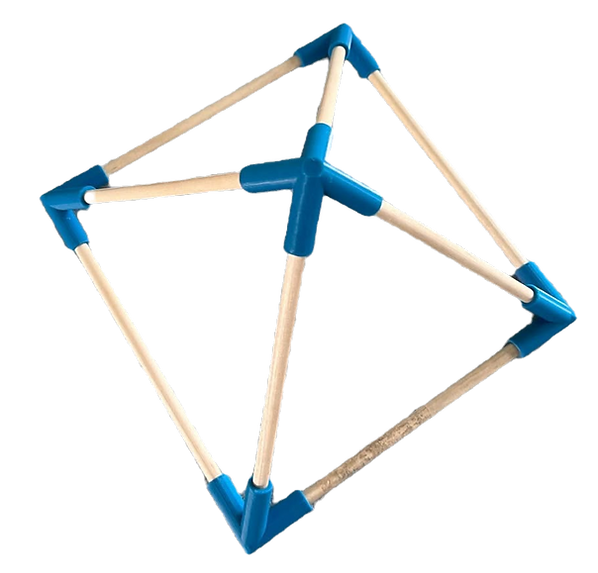
Researchers at Swami Vivekananda Yoga Anusandhana Samsthana (Bangalore) tested two square pyramid enclosures — plywood (PLSP) and fiberglass (FGSP), both 315mm × 200mm — against an open-air control on fenugreek seed germination and seedling emergence over 4 days. Seeds were not pre-treated in pyramids; rather, germination rolls (240 seeds per treatment) were placed at the base of each pyramid during the germination window.
The plywood pyramid produced statistically significant improvements across all metrics: radical length +32% at day 2 (p<0.001), seedling vigor +15.2% at day 4 (p<0.001), fresh weight +14.45%, dry weight +16%, and emergence rate +4 percentage points. The fiberglass pyramid showed no significant radical length improvement at day 2 and only weak seedling vigor improvement at day 4 (p=0.040, +6.3%).
The critical finding — not flagged as a confound by the authors — is that the plywood pyramid maintained an interior temperature of 31°C versus 26°C for the open-air control, a consistent +5°C differential. Fenugreek germination is thermally responsive in this range; the temperature advantage alone is sufficient to explain the observed acceleration via standard metabolic rate effects. The fiberglass pyramid’s intermediate temperature (28–29°C) and intermediate effect size further support a thermal, not geometric, mechanism.
The authors attribute results to pyramid geometry capturing “cosmic radiation” as “life energy,” and explain the PLSP/FGSP performance gap by plywood’s opacity retaining this energy field while fiberglass dissipates it. This mechanism is untestable and inconsistent with the temperature data.
Vault reference: [[Paper - Kumar Nagendra - Pyramid Effect on Fenugreek Germination 2011]] in the Energetic Agriculture vault.