Effect of Pyramid Shapes on Bean Growth and Yield — Giza Proportion Comparison (Kuzmina & Voropaeva 2013)
Key Findings
- Germination: all three pyramid types produced germination by Day 4; control germinated Day 6 — 2-day acceleration across all pyramid shapes.
- Seedling height at Day 12: Ф (Mycerinus) avg ~20cm, Ф2 (Khafre) avg ~15.5cm, Ф3 (Khufu) avg ~11cm, control avg ~6.5–10cm. All pyramids outperformed control.
- Root health: all pyramid seedlings had no necrotic spots on roots; control seedlings showed necrotic root spots.
- Yield per plant: Ф (Mycerinus) 50g, Ф2 (Khafre) 40g, Ф3 (Khufu) 40.5g, control 30g. Best pyramid +67% yield vs. control.
- First harvest timing: Ф day 62, Ф3 day 64, Ф2 day 66, control day 69 — Mycerinus pyramid 7 days ahead of control.
- Bean quality: pyramid groups 2–7% minor pigmentation anomalies; control 11% pigmentation, 3% deformed, 3% diseased/damaged.
- Mycerinus-proportioned pyramid (Ф) was most effective across all parameters; Khufu-proportioned was least effective among the three pyramid types.
A student experiment at Korkyt Ata Kyzylorda State University (Kazakhstan) testing scale models of all three main Giza pyramids on common bean (Phaseolus vulgaris) germination, growth, and yield — the only study in this collection that systematically varies pyramid proportions as the experimental variable while holding material and enclosure type constant.
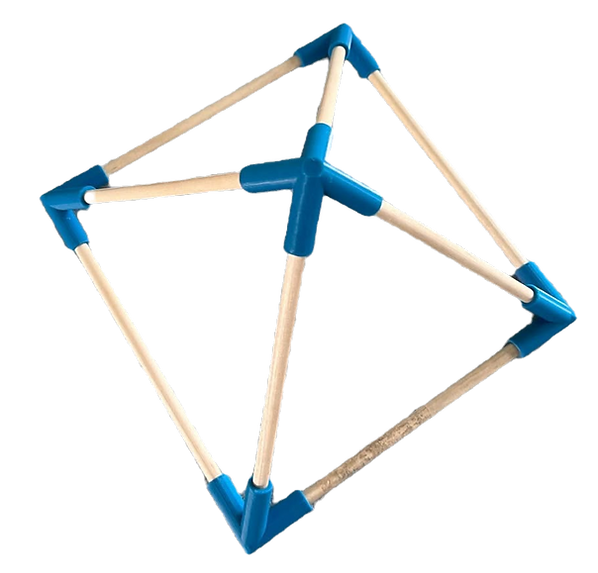
Three pyramid types were tested in 4-fold replication: (Ф) Mycerinus-proportioned (height:base = 11:18), (Ф2) Khafre-proportioned (face tilt 53.13°), and (Ф3) Khufu-proportioned (golden ratio 1:Φ:Φ). Bean seeds were placed inside the models from planting through first harvest.
Germination: All three pyramid types accelerated germination to Day 4 vs. Day 6 for control — a 2-day improvement regardless of pyramid geometry.
Seedling height at Day 12: Strong gradient — Ф (Mycerinus, ~20cm average) > Ф2 (Khafre, ~15.5cm) > Ф3 (Khufu, ~11cm) > control (~6.5cm). An unexpected finding: Khufu (the Great Pyramid, most commonly studied in pyramid power research) was the least effective of the three pyramid shapes — outperforming control but underperforming both Khafre and Mycerinus proportions.
Root health: A qualitative but striking observation — all seedlings grown inside pyramids were free of necrotic spots on roots and shoots. Control seedlings showed necrotic root spots. This matches the antimicrobial suppression observed in the SVYASA milk study (Kumar 2005) and suggests a possible plant health mechanism beyond simple growth acceleration.
Yield: Mycerinus-proportioned pyramid: 50g/plant, first harvest Day 62. Control: 30g/plant, first harvest Day 69. +67% yield improvement, 7 days earlier. Quality was better in all pyramid groups (low anomaly rates) vs. control (11% pigmentation defects, 3% deformed, 3% diseased).
Confidence is rated very low (0.15) due to the absence of any inferential statistics in what is explicitly a student science conference paper. The directional pattern is consistent and the effect sizes are large, but none of the results can be assessed for statistical reliability. The shape comparison result (Mycerinus > Khafre > Khufu) is particularly interesting and warrants a controlled replication with proper statistics and temperature monitoring.
Source: Kuzmina GV, Voropaeva AA. SND 2013 Conference Proceedings, Biology section. rusnauka.com/4_SND_2013/Biologia/2_128263.doc.htm. Korkyt Ata Kyzylorda State University, Kazakhstan.