Sriyantra, Pyramid, and Mantra Effect on Seed Germination (Jang, Pan & Kumar 2016)
Key Findings
- Design 1 (green gram, 10 trials × 40 seeds each): Plywood pyramid PP1 (15×15×12.5cm, N-S) increased radical length +331.3% vs. control (5.65cm vs. 1.31cm, p<0.0001); plastic pyramid PP2 (19×19×17cm) +287.8% (5.08cm, p<0.0001); paper sriyantra Y1 +108.4% (2.73cm, p<0.0001).
- PP1 fresh weight increased +80.98%; PP2 fresh weight +103.10%; Y1 fresh weight +34.66% vs. control.
- PP1 outperformed larger PP2 in radical length (p=0.00104) — consistent with 2011 fenugreek findings where plywood outperformed fiberglass.
- Design 2 (fenugreek, 5 trials × 120 seeds): Maha Mrtyunjaya mantra (108 repetitions at 5:15am and 7pm for 2 days) increased radical length +25.6% (3.45cm vs. 2.74cm, p<0.0001) and FW +10.6%.
- Control for Design 1: petri dish covered with white paper — a non-standard control that may suppress airflow and create suboptimal germination conditions.
Two parallel germination experiments from the SVYASA research group at Bangalore (same institution as Kumar 2005, Kumar & Nagendra 2011).
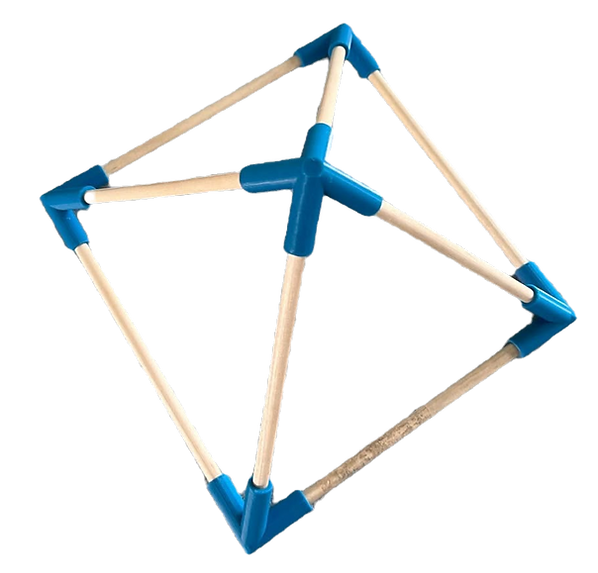
Design 1 — Green gram (mung bean, Vigna radiata): Seeds soaked 9 hours, germinated on wet filter paper in petri dishes for 2 days, watered twice daily. Control: petri dish covered with white paper. Four treatments: paper sriyantra (9.5×9.5cm placed over dish), plywood pyramid PP1 (15×15×12.5cm, N-S oriented), plastic pyramid PP2 (19×19×17cm, N-S oriented). 40 seeds per trial, 10 trials per treatment.
Radical length results at Day 2: control 1.31cm; sriyantra 2.73cm (+108.4%); PP1 5.65cm (+331.3%); PP2 5.08cm (+287.8%). All comparisons p<0.0001. PP1 significantly outperformed the larger PP2 (p=0.00104) — replicating the 2011 finding that plywood outperforms fiberglass, and here extending it to plastic vs. plywood.
Design 2 — Fenugreek with mantra: 600 seeds per group (5 trials × 120 seeds). The Maha Mrtyunjaya mantra was chanted 108 times by a single female chanter at 5:15am and 7pm for both germination days. Result: radical length +25.6% (3.45cm vs. 2.74cm, p<0.0001), fresh weight +10.6%, dry weight +4.4%, emergence rate +1%. Authors noted intact seed coat in mantra group vs. separation in control — an unexplained morphological difference.
Critical note on effect size: The +331% radical length for PP1 is 10× larger than the +32% seen in Kumar & Nagendra 2011 for the same pyramid type on fenugreek. The most likely explanation is the combination of species (green gram germinates much faster than fenugreek), a suppressive white-paper control that depresses the denominator, and the longer pre-soak (9h activates the seed further before measurement). This inconsistency is documented but not explained by the authors, and is the primary reason confidence is held at 0.4.
Source: Jang J, Pan J, Kumar IR. Indian Journal of Traditional Knowledge 15(4) (2016), pp. 680–684.