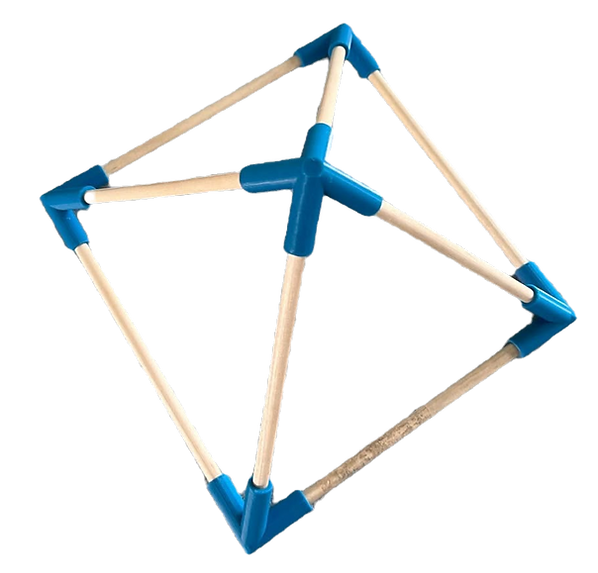
Potential Power of the Pyramidal Structure III: Seasonal and Non-Seasonal Effects (Takagi et al. 2020)
Key Findings
- Non-seasonal effect: Layer 1 psi < Layer 2 psi holds in all four seasons — p=1.4×10⁻³ (spring), p=2.7×10⁻² (summer), p=3.6×10⁻³ (autumn); winter marginal p=7.6×10⁻² due to smaller n=84 sample.
- Seasonal effect: both layers show negative psi in winter, positive psi in summer; LayerAve winter vs. summer: p=1.8×10⁻³.
- The psi maximum for Layer 1 (lower) occurs in spring; the maximum for Layer 2 (upper) occurs in summer — seasonal peaks offset by one quarter-year.
- Conclusion: two coexisting types of potential power at the PS apex — a non-seasonal structural effect (lower < upper) and a seasonal amplitude effect (larger in summer).
- n = 468 total: winter n=84, spring n=108, summer n=144, autumn n=132.
The third paper in the IRI “Potential Power” series divides the same n=468 cucumber biosensor dataset by calendar season to investigate whether the pyramid apex effect varies throughout the year. The analysis reveals two distinct types of potential power coexisting at the pyramid apex.
Non-seasonal effect (structural): In every season, Layer 1 (lower biosensor) shows a smaller psi index than Layer 2 (upper biosensor). This ordering — always lower < upper — is maintained regardless of season, confirmed at p=4.0×10⁻⁷ overall and with statistically significant pairwise differences in three of four seasons (all but winter, where n=84 may be underpowered).
Seasonal effect (amplitude): The absolute magnitude of the psi index changes with season. Both layers are negative in winter (pyramid effect suppresses gas emission in both positions below calibration) and positive in summer (pyramid enhances emission in both positions). The seasonal swing between winter and summer is significant at p=1.8×10⁻³. Summer shows the largest positive effect overall. An additional subtlety: Layer 1 reaches its seasonal maximum in spring while Layer 2 peaks in summer, creating a quarter-year offset between the two positions’ seasonal trajectories.
Interpretation: The authors describe this as two independent “types” of potential power at the PS apex — one that creates a stable vertical gradient (non-seasonal) and one that modulates the overall amplitude with the seasons (seasonal). They suggest the seasonal variation may relate to annual cycles in solar radiation or geomagnetism but do not test this hypothesis explicitly.
Agricultural implication: If pyramid apex effects are stronger in summer and weaker in winter, this would predict that pyramid-based agricultural treatments (seed germination, crop storage) might show larger benefits during summer growing seasons than in winter storage conditions — a testable prediction that has not been explicitly examined in the SVYASA germination or antimicrobial studies.
Source: Takagi O, Sakamoto M, Yoichi H, Kawano K, Yamamoto M. Natural Science 12(12) (2020), pp. 743–753. DOI: 10.4236/ns.2020.1212066.