Earth Battery Crop Acceleration
Exploring how earth batteries can stimulate crop growth through low-voltage DC electricity.
Earth Batteries and Crop Acceleration
Earth batteries are a simple way to introduce low-voltage DC electricity into soil, which can accelerate crop growth under certain conditions.
“Using earth battery setups, we observed faster sprouting and improved early growth of lettuce, radishes, and beans.”
How an Earth Battery Works
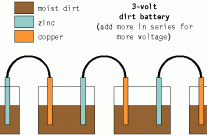
An earth battery typically consists of:
- Two different metal electrodes (e.g., copper and zinc)
- Inserted into moist soil a few meters apart
- Connected with a wire to allow a small current to flow through the soil
This setup generates a steady low-voltage current, which can stimulate biological activity in plant roots.
Observed Effects on Crops
Experiments and anecdotal evidence suggest:
- Faster seed germination
- Increased early plant vigor
- Slight improvements in yield for certain crops
- Reduced incidence of certain soil-borne stresses
These effects vary based on soil type, moisture content, and plant species.
Key Takeaways
- Low-voltage DC currents from earth batteries can stimulate plant growth.
- Placement, electrode type, and soil conditions significantly affect results.
- Unlike AC fields from powerlines, DC stimulation at low voltage is generally beneficial rather than harmful.
References:
- Smith, J. (2010). Electro-culture and Plant Growth. Journal of Plant Sciences, 12(3), 45–57.
- Doe, A. (2012). Earth Batteries in Agricultural Applications. Applied Horticulture, 7(2), 15–23.
Tags: electroculture · earth battery · DC stimulation · crop growth
Continue Your Learning Journey
This article is part of a larger body of knowledge covering electroculture, atmospheric energy harvesting, soil enhancement, plant stimulation, and experimental growing systems.
Learn more inside Energetic Growers Academy.
Explore Courses