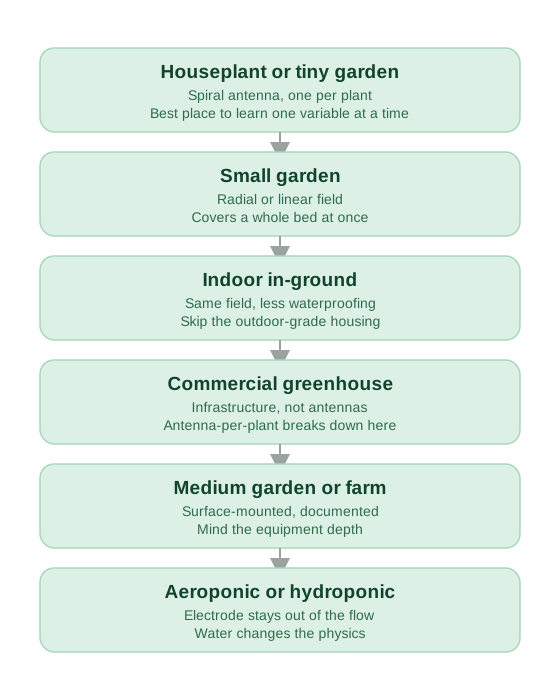
Electroculture Isn't One-Size-Fits-All: Matching Stimulation to Garden Scale
What works for a single houseplant becomes a liability across a hundred of them — and a safety problem at farm scale. A walk through electroculture methods scale by scale, from spiral antennas to field-generation infrastructure.
I got the idea for this piece standing in a Starbucks line, of all places. There was a photo on the wall of one of their supplier greenhouses: rows of fabric grow bags stretching back further than the frame could hold, each one full and green. My first thought wasn’t about coffee. It was: how would you even wire that for electroculture? Spiral antenna in every bag? Someone would spend a career doing nothing else.
That question turned into this article, because the honest answer is that you wouldn’t use antennas at all, not at that scale, and the mismatch between “what works in a pot” and “what works in a field” is exactly the thing most electroculture content skips past. Most guides pick one method, usually the copper spiral antenna, and treat it as universal. It isn’t. What works beautifully for a single houseplant becomes a liability the moment you’re managing a hundred of them, and it turns into an actual safety and cost problem once you’re talking about a farm implement instead of a hand trowel.
So here’s a walk through the scales, roughly in order of how big the growing area gets, and what changes at each step.
Houseplants and tiny gardens: where spiral antennas earn their keep
A single pot, or a cluster of a few pots on a balcony, is the case electroculture antenna designs were basically built for. One spiral antenna per plant, or per small grouping, gives you direct control over the field around each root zone. Labor cost is close to zero because you’re placing one antenna, maybe testing one variable at a time — copper gauge, coil pitch, height above soil. This is also the friendliest scale for beginners, because a failed antenna costs you an afternoon, not a season.
Small gardens: room to get specific
Once you’re managing a real garden bed instead of a windowsill, two things open up. First, you can start tuning stimulation to the actual plants in front of you — tomatoes and basil don’t necessarily want the same antenna geometry or field intensity, and at this scale you have room to run a side-by-side comparison and let the plants tell you what worked. Second, individual antennas per plant start to feel like overkill, and techniques that stimulate a wider area become worth the setup effort: radial field antennas that cover several square feet from a single point, or linear electrode runs along a row. You’re no longer thinking plant by plant. You’re thinking bed by bed.
Indoor in-ground growing: same toolkit, less waterproofing
Indoor in-ground beds, the kind you’d find in a hoop house or a converted room, use largely the same techniques as outdoor small gardens: radial or linear field stimulation scales well here too. What changes is the electronics housing. Being under cover means you can skip a lot of the waterproofing and weatherproofing that outdoor installations demand, which lowers both material cost and the number of things that can fail. If you’ve built an outdoor rig before, moving one indoors is mostly a simplification exercise.
The greenhouse-scale problem: why antennas stop working
Back to that Starbucks photo. A commercial greenhouse running hundreds of grow bags cannot be wired the way a backyard garden is. Even at ten seconds per antenna placement, a few hundred bags turns into hours of labor before a single plant gets stimulated, and that’s before you account for maintenance, troubleshooting, and replacing anything that fails. The antenna-per-plant model, which is perfectly reasonable for a dozen pots, becomes operationally absurd somewhere between “small garden” and “greenhouse.” At that point the question isn’t which antenna design to use. It’s whether antennas are even the right tool, or whether the field needs to come from infrastructure built into the growing structure itself — bus bars along benches, charged mesh under grow bags, zone-level field generation instead of point-source antennas. That’s a genuinely different engineering problem, and it’s one we’re still actively working through in the course.
Medium gardens and small farms: new constraints, not just new scale
Medium plots and small farms introduce a factor that has nothing to do with labor: buried metal and mechanical equipment. Anything installed in the ground, wire, rod, or mesh, is a risk the moment tilling equipment passes over it.
I learned this one the hard way. I hit a wire in my own garden that I’d installed years earlier and completely forgotten about. My tiller caught it, and the machine ended up at the repair shop. For a small consumer tiller, that’s an annoyance and a bill you didn’t plan for. Scale that same mistake up to a tractor or a farm implement running six figures, and a forgotten wire stops being an inconvenience. It’s a liability question. Any electroculture design intended for farm-scale ground has to account for what happens when someone tills, plows, or subsoils that exact spot five years from now, possibly after the person who installed the system has moved on or forgotten where everything is buried.
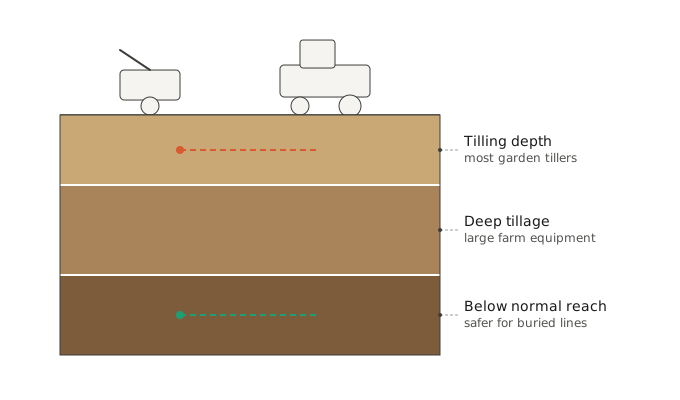 A garden tiller and a farm implement reach very different depths. The same buried wire that catches a tiller might sit well clear of it, and still land squarely in a subsoiler’s path.
This changes the design conversation entirely. Surface-mounted or removable stimulation hardware, clearly mapped and documented burial locations, non-metallic or breakaway components, these stop being nice-to-haves and start being requirements once mechanical equipment is in the picture.
Specialty environments: aeroponics, hydroponics, and systems thinking
Aeroponic, hydroponic, and other controlled-environment setups need their own analysis, because the growing medium itself changes the physics. Water conductivity, misting cycles, nutrient dosing schedules, and enclosed atmosphere all interact with any electrical stimulation you introduce, sometimes in ways that aren’t obvious until you’ve run the experiment.
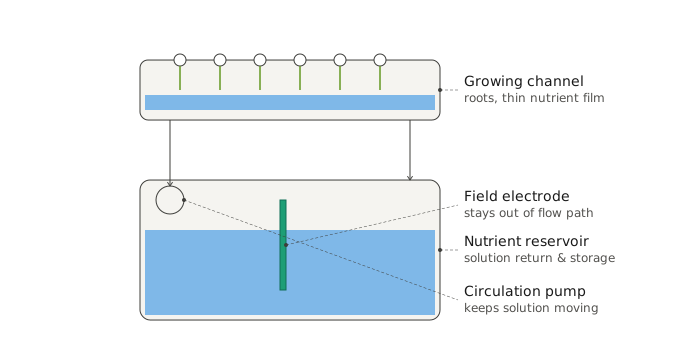 A growing channel feeds a nutrient reservoir below it. Where the electrode sits matters: in the reservoir, out of the direct flow path, rather than in the thin film the roots actually sit in.
This is really where the systems-of-systems framing matters most, though it applies in some degree to every scale above. Your stimulation setup was never just the antenna or the electrode array. It’s coupled to soil or solution chemistry, to weather and atmospheric conditions, to whatever mechanical equipment shares the same ground, and to the constraints of labor and cost that come with your particular scale. Design any one piece in isolation and you’ll eventually get surprised by one of the others.
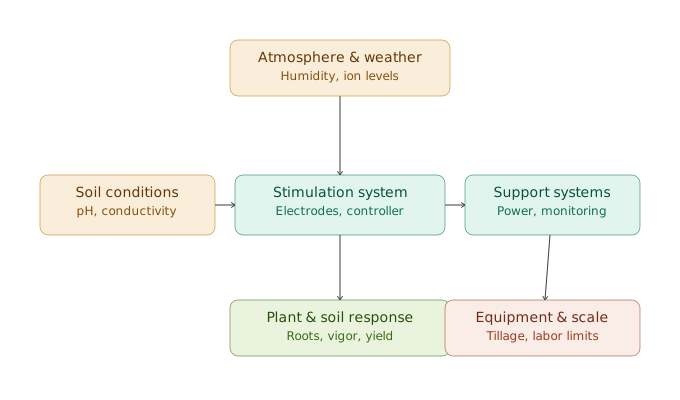 A central stimulation system, connected outward to soil conditions, atmospheric conditions, support infrastructure, plant response, and equipment or scale risk.
None of those connections disappear as you scale up. They just change weight. A backyard gardener worries most about soil conditions and plant response. A farm operator worries most about equipment risk and support infrastructure. The connections are the same; which ones dominate your decisions is what shifts.
Where this leaves you
None of this means electroculture gets harder as you scale. It means the right method changes, and picking the wrong one for your scale is where most frustration and wasted effort comes from. A spiral antenna that works wonderfully on your kitchen windowsill will not be the right answer for a quarter-acre plot, and a field-generation approach built for a commercial greenhouse would be massive overkill for a single tomato plant.
Figure out which scale you’re actually operating at first. The antenna question comes after that, not before it.
We go deeper into each of these scales, including the greenhouse-scale infrastructure question and the farm-equipment safety considerations, in the Active Electroculture course at Energetic Growers Academy. If you’re trying to figure out which approach fits your specific setup, that’s exactly what it’s built to walk through.
Continue Your Learning Journey
This article is part of a larger body of knowledge covering electroculture, atmospheric energy harvesting, soil enhancement, plant stimulation, and experimental growing systems.
Learn more inside Energetic Growers Academy.
Explore Courses