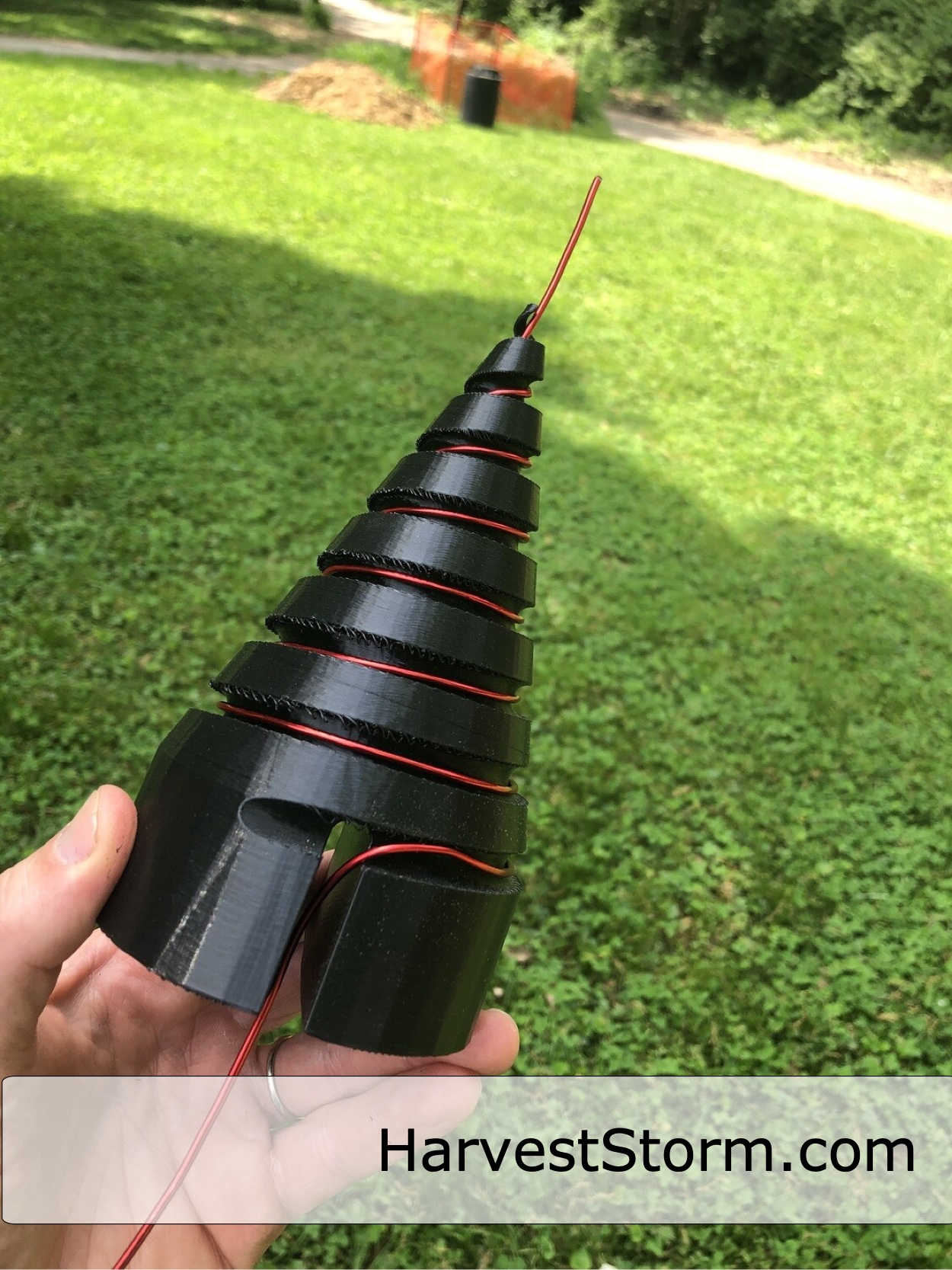
Ighina Spiral Antenna Molds — 3D Print STL Files
Downloadable STL files for 3D-printing your own Ighina conical spiral antenna molds. Print once, wind unlimited copper spirals — personal license for home and garden use.
Key Features
- Instant digital download — STL files ready for your slicer
- Personal license — print as many as you need for your own garden
- Ighina conical spiral proportions — documented geometry
- Compatible with FDM printers: PLA, PETG, ABS all work
- Recommended print: PETG for outdoor UV resistance
- Includes winding guide PDF
Specifications
- Format
- STL (3D print file)
- License
- Personal use — home and garden
- Recommended Material
- PETG (outdoor) or PLA (indoor)
- Wire Gauge
- 18–24 AWG recommended
- Compatible Wire
- Copper, brass, aluminum, any flexible conductor
- Delivery
- Instant digital download via Payhip
Secure checkout via Payhip
Product Details
Ighina Spiral Antenna Molds — STL Download
Print the mold. Wind the spiral. Deploy it in your garden. Repeat as many times as you want.
What You’re Getting
This is a digital download — you receive STL files sized and proportioned for the Ighina conical spiral form. Print them on any FDM printer (PETG recommended for outdoor durability), then use the printed mold to wind copper wire into consistent, correctly-proportioned spiral antennas.
One purchase, unlimited prints, unlimited spirals.
Who Was Ighina?
Pier Luigi Ighina (1908–2004) was an Italian independent researcher who claimed to have worked alongside Guglielmo Marconi. His agricultural and therapeutic devices centered on vortex and spiral geometries he believed could interact with subtle electromagnetic fields in living systems. His spiral antenna forms — wound in specific conical proportions — have become a staple of the DIY electroculture community.
Whether you’re drawn to the subtle-energy framing or simply interested in spiral geometries as passive antenna forms, these molds let you reproduce the designs with precision and consistency.
Printing Notes
- Material: PETG is ideal for outdoor molds (UV and moisture resistant). PLA works fine for indoor use.
- Infill: 20–30% is sufficient — the mold only needs to hold wire tension
- Supports: Minimal; the cone geometry self-supports on most slicers
- Scale: Print at 100% for the standard size; scale up for larger spirals
Winding Guide
A PDF winding guide is included with your download. It covers:
- Wire gauge recommendations for different use cases
- Winding direction and tension
- Grounding options (earth stake vs. floating)
- Placement in soil, pots, and raised beds
Personal License
This purchase covers personal and home garden use — print and use as many as you want for yourself. If you want to sell printed molds, please contact us for commercial license pricing.
Works beautifully combined with Giza Pyramid Connectors — a copper spiral inside the pyramid is one of the most popular layered passive setups in the community.
What the Research Says
Scientific claims relevant to this product, drawn from our research library.
Electroculture Increases Plant Growth
Application of low-level electrical fields may accelerate plant development and biomass accumulation.
Research cards link to our science library, which rates evidence quality and tracks limitations. We present this data to help you make informed decisions — not as medical or agronomic advice.
You May Also Like
New to Electroculture?
Learn how this technology works and how to use it effectively inside Energetic Growers Academy.
Learn More